

Train with a Me.thod.
Not guesswork.
Me.thod is a strength-training autopilot at the intersection of sports science, coaching experience, and reliable tech. Get a personalized plan, clear step-by-step instructions, and dynamic load adaptation that adjusts to your recovery and progress.
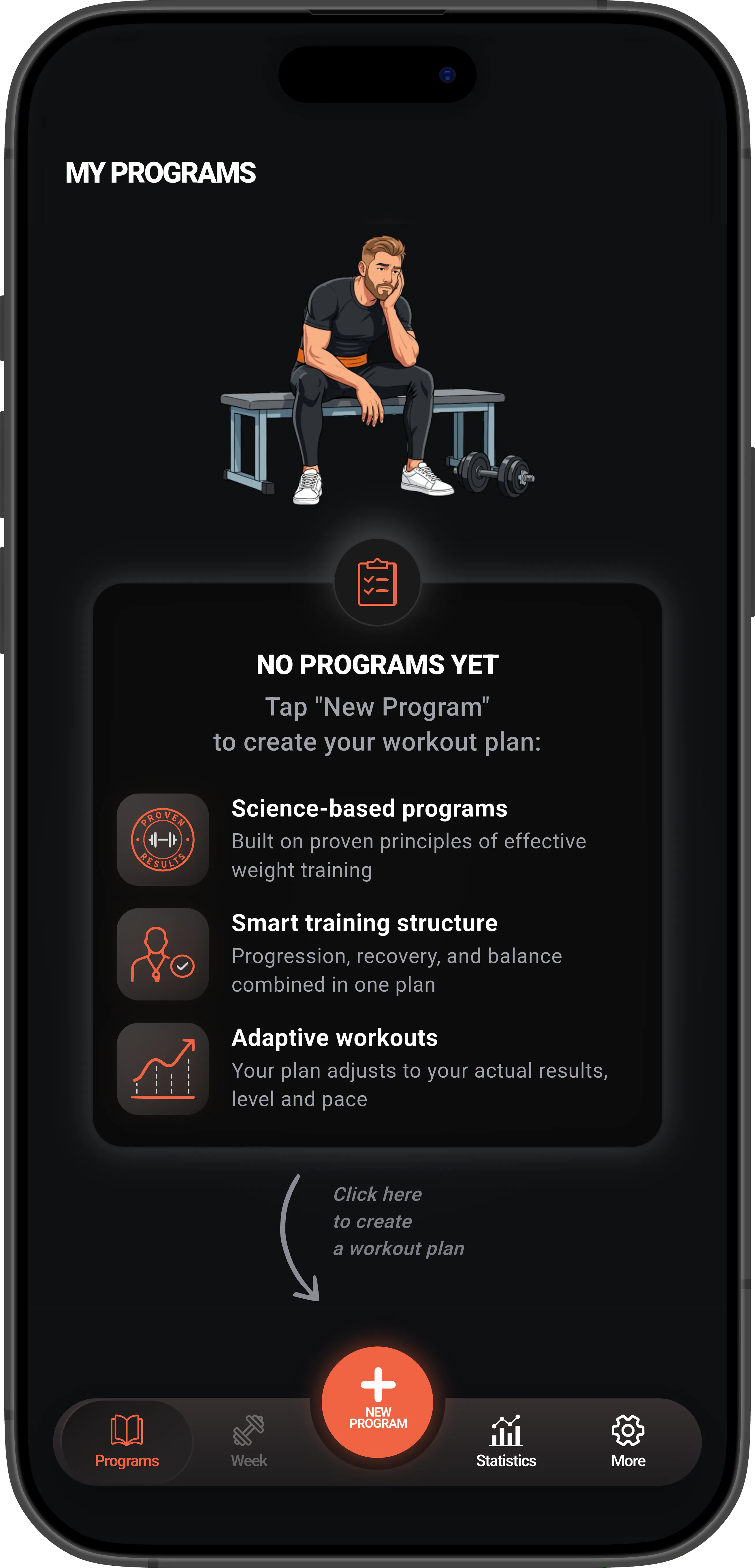
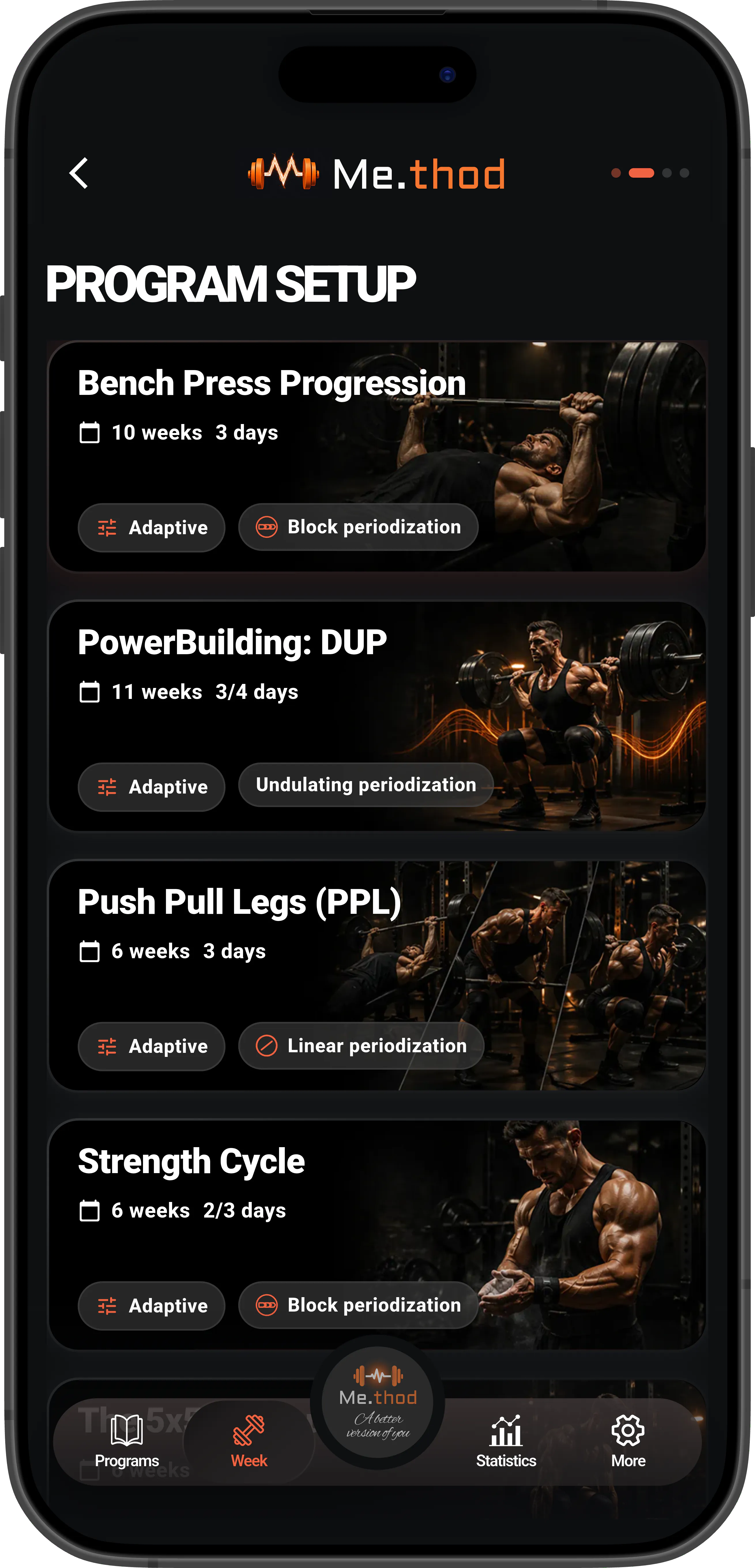
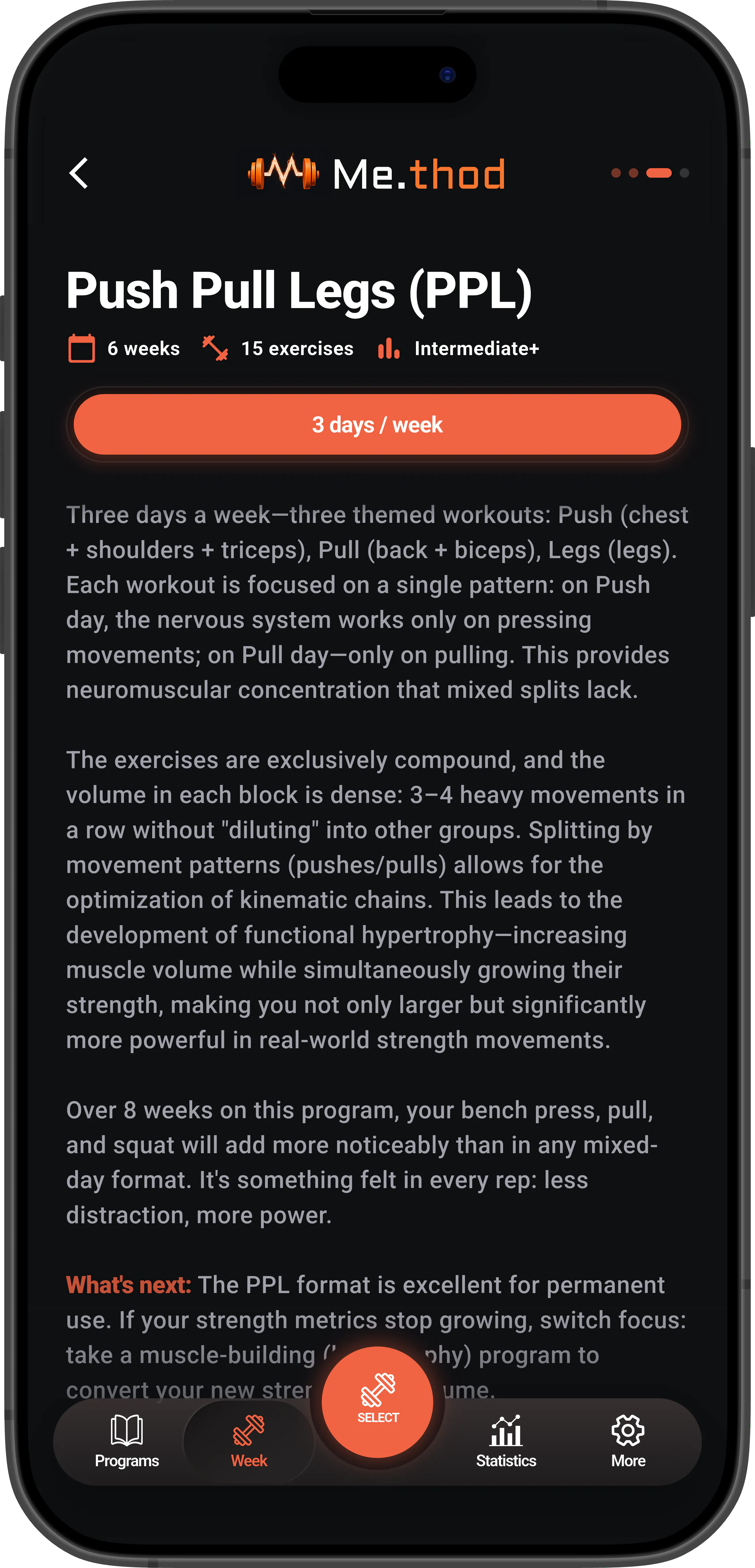
Why Me.thod is different
We designed Me.thod to replace rigid static spreadsheets and random training generators with a responsive, science-based autopilot.
| Criteria | Me.thod (Autopilot) | Workout Tracker App | Hyped AI-Trainer | Excel Sheet |
|---|---|---|---|---|
| Methodology How workouts are structured over time | Long-term cyclic planning based on wave load principles to balance volume, intensity, and CNS stress. | The user is fully responsible for programming logic, cycles, and fatigue balancing. | Session-to-session randomized workout suggestions without a coherent long-term progress strategy. | Tolerable but highly difficult to program wave cycles and adjust accessory volumes automatically. |
| Session Plan What you see when entering the gym | Exact exercises, weights, sets, and rest intervals calculated for today. You train; the app thinks. | Planning must be done manually prior to, or during, the workout session. | Suggests exercise sequences, but often fails on target intensity progressions. | Core lifts are usually covered, but accessory work and detailed guidelines are typically omitted. |
| Working Weights How weights are calculated | Auto-calculates weight steps using Reps in Reserve (RIR) feedback and submaximal 1RM scaling. | User guesses weights, leading to 'intuitive training' mistakes and early plateaus. | Attempts weight estimation using basic algorithms, risking dangerous load spikes. | Static calculations ignore day-to-day variables (sleep, stress, fatigue) and CNS readiness. |
| Warm-up Sets Preparing for working sets | Custom CNS Potentiation (8/6/4/2 ramping) and joint mobilization schemes designed specifically for today's load. | Skipped entirely, or requires manual calculation on calculators/mental math. | Basic percentage-based warm-up sets that ignore the specific movement class. | Simplistic static equations that are tedious to recalculate for every weight change. |
| Progress Monitoring Tracking strength and statistics | Collects statistics, shows volume metrics, and plots progressive 1RM strength curves. | Keeps list entries, but you must look up history manually to analyze trends. | Logs and visualizes progression trends automatically in dashboard. | Requires manual database entries, writing complex formulas, and creating static charts. |
| Habit Building Focus and discipline | Maintains focus, tracking weekly volume and streaks without cheap dopaminergic hooks. | Tracks workouts, but does not provide visual cues to build routine. | Exploits your dopamine with virtual badges instead of actual strength progression. | BYOD — Bring Your Own Discipline to the blank spreadsheet. |
Long-term cyclic planning based on wave load principles to balance volume, intensity, and CNS stress.
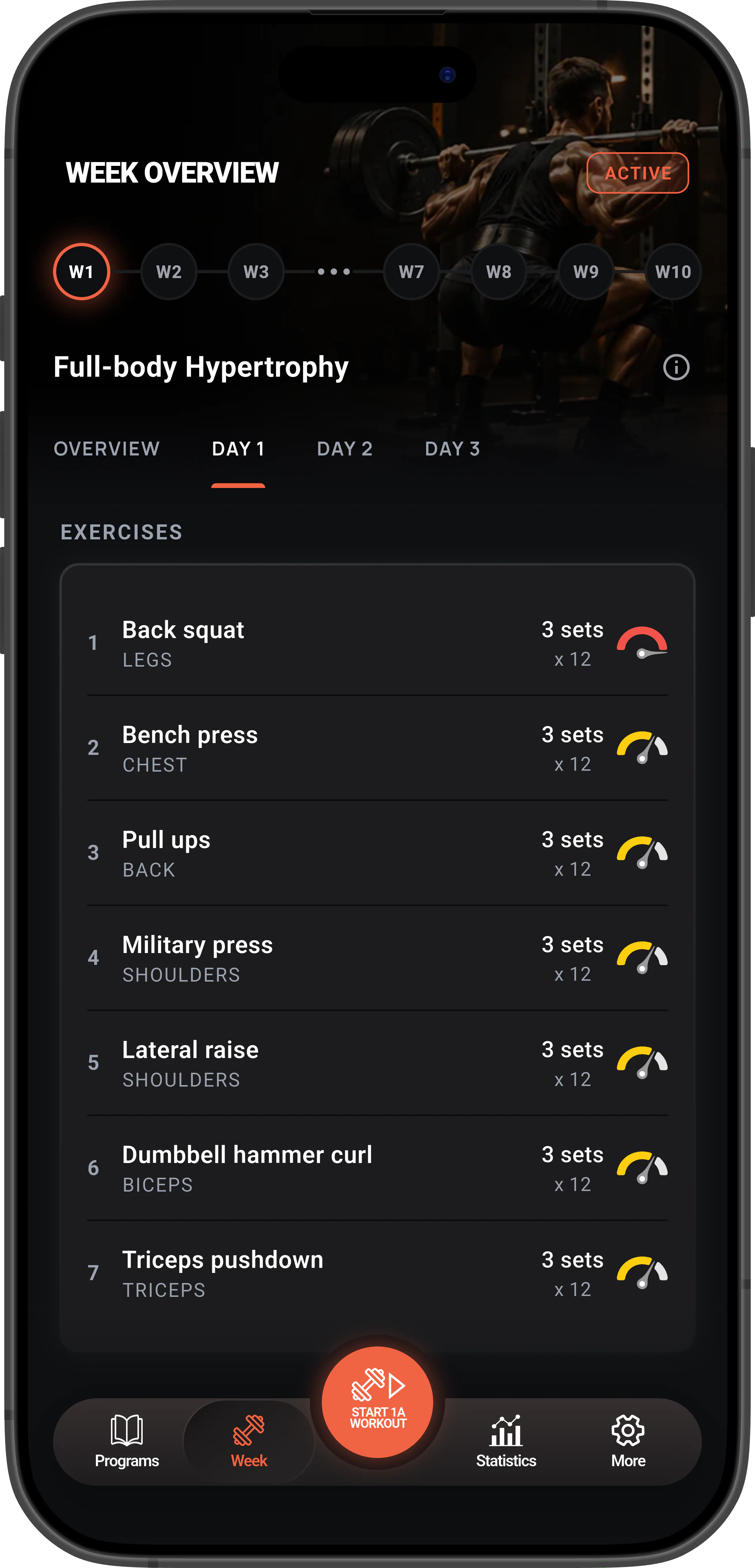
Exact exercises, weights, sets, and rest intervals calculated for today. You train; the app thinks.
Auto-calculates weight steps using Reps in Reserve (RIR) feedback and submaximal 1RM scaling.
Custom CNS Potentiation (8/6/4/2 ramping) and joint mobilization schemes designed specifically for today's load.
Collects statistics, shows volume metrics, and plots progressive 1RM strength curves.
Maintains focus, tracking weekly volume and streaks without cheap dopaminergic hooks.
The user is fully responsible for programming logic, cycles, and fatigue balancing.
Planning must be done manually prior to, or during, the workout session.
User guesses weights, leading to 'intuitive training' mistakes and early plateaus.
Skipped entirely, or requires manual calculation on calculators/mental math.
Keeps list entries, but you must look up history manually to analyze trends.
Tracks workouts, but does not provide visual cues to build routine.
Session-to-session randomized workout suggestions without a coherent long-term progress strategy.
Suggests exercise sequences, but often fails on target intensity progressions.
Attempts weight estimation using basic algorithms, risking dangerous load spikes.
Basic percentage-based warm-up sets that ignore the specific movement class.
Logs and visualizes progression trends automatically in dashboard.
Exploits your dopamine with virtual badges instead of actual strength progression.
Tolerable but highly difficult to program wave cycles and adjust accessory volumes automatically.
Core lifts are usually covered, but accessory work and detailed guidelines are typically omitted.
Static calculations ignore day-to-day variables (sleep, stress, fatigue) and CNS readiness.
Simplistic static equations that are tedious to recalculate for every weight change.
Requires manual database entries, writing complex formulas, and creating static charts.
BYOD — Bring Your Own Discipline to the blank spreadsheet.
The science of progression
Linear weight increases inevitably stall. Me.thod adapts to your muscle tissue response and nervous system recovery.
Escape the linear traps
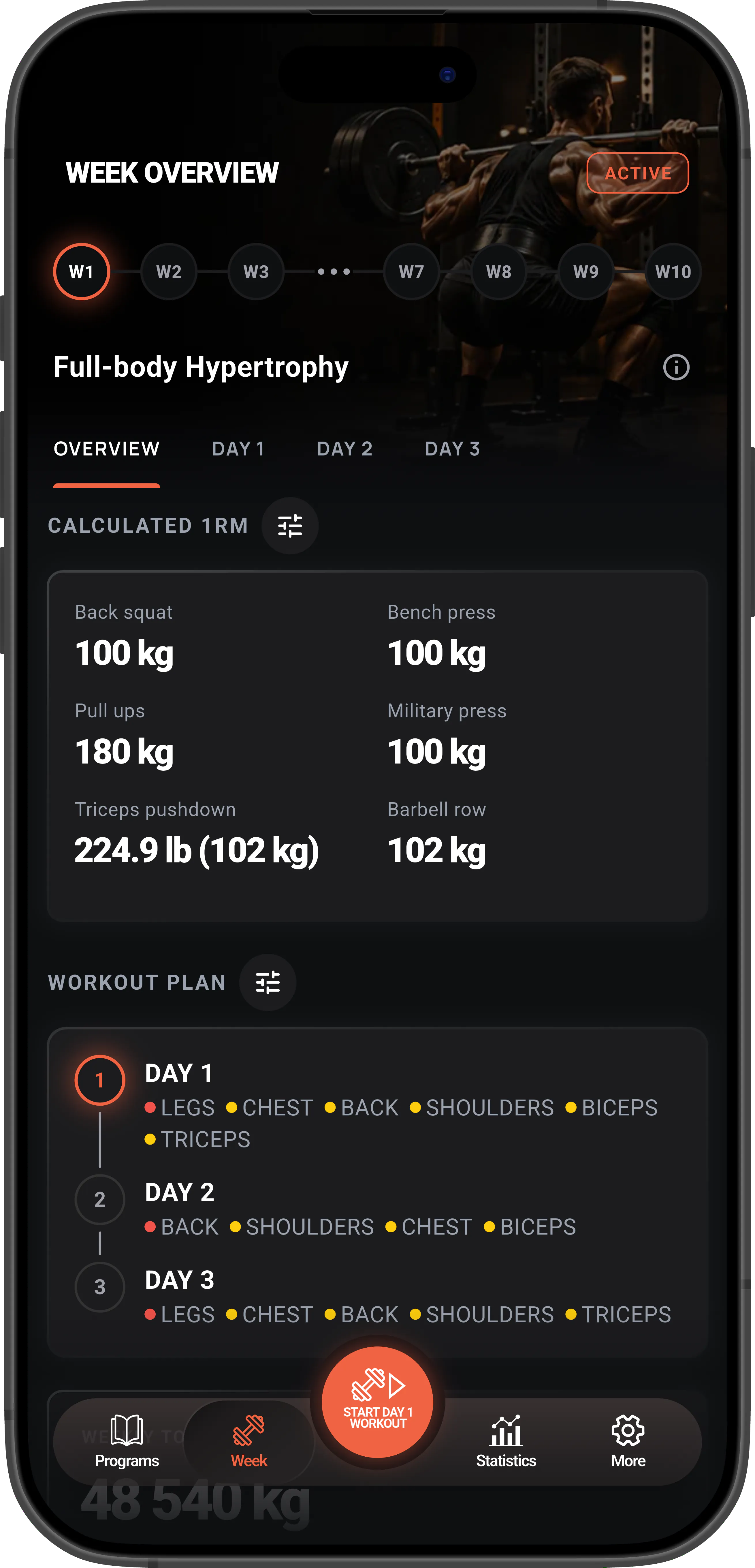
If you have been training for more than six months, linear progression stops working. Me.thod solves this by applying undulating periodization and auto-regulation. The algorithm tracks your Reps in Reserve (RIR) or dynamic 1RM to recalibrate working weights in real-time. Lift exactly what your central nervous system can handle today—maximizing adaptation while protecting joints in high-fatigue cycles.
Autoprogress on autopilot
Stepping into a weight room without knowing your working weights is intimidating. Copying influencer workouts often leads to early injury or burnout. Me.thod guides you step-by-step. The app initiates with a gentle calibration week to find your baseline (no heavy tests required), aligns a balanced program to your goals, and ramps up load at a safe pace. You avoid training chaos and see visual results from day one.
Autoregulation Autopilot
Rather than static weights, Me.thod uses RIR (Reps in Reserve) and dynamic 1RM calculations. The algorithm adapts to your daily strength and recovery levels, adjusting sets and weights dynamically.
CNS Potentiation Warm-up
A scientific warm-up increases strength by up to 8%. Me.thod builds custom ramping sets (such as 8/6/4/2 CNS potentiation for heavy compounds) to prepare your nervous system without muscle fatigue.
Wave Periodization
Chasing constant maximums leads to injury. Me.thod uses structured block and undulating periodization, shifting from volume building to intensity peaking, with automated deload weeks.
Tachometer & Analytics
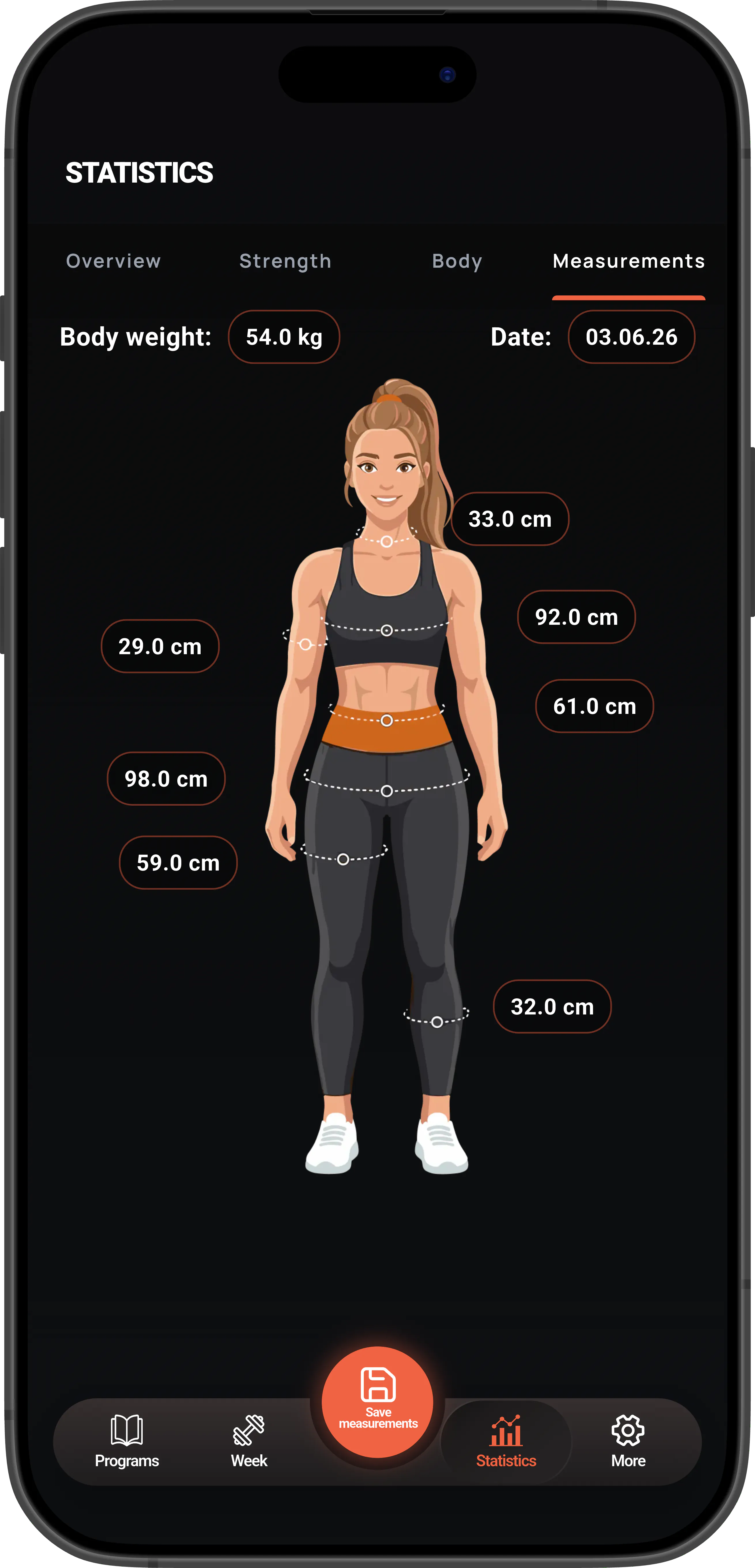
Tracks training consistency (streaks) and volume stress metrics. Long-term progression maps calculate your true strength improvements over months and years.
Designed for daily practice
No useless features. Just the utilities that make training in the real world comfortable and efficient.
Offline-First Autopilot
Your program plans and training history are cached locally in an optimized database. Train in deep basement gyms with zero loading screens. Synchronizes to the cloud instantly when online.
Smart Exercise Swaps
If equipment is occupied, swap the exercise for a biometric counterpart with a single tap. Me.thod maps your previous strength progression and sets target weights correctly for the new movement.
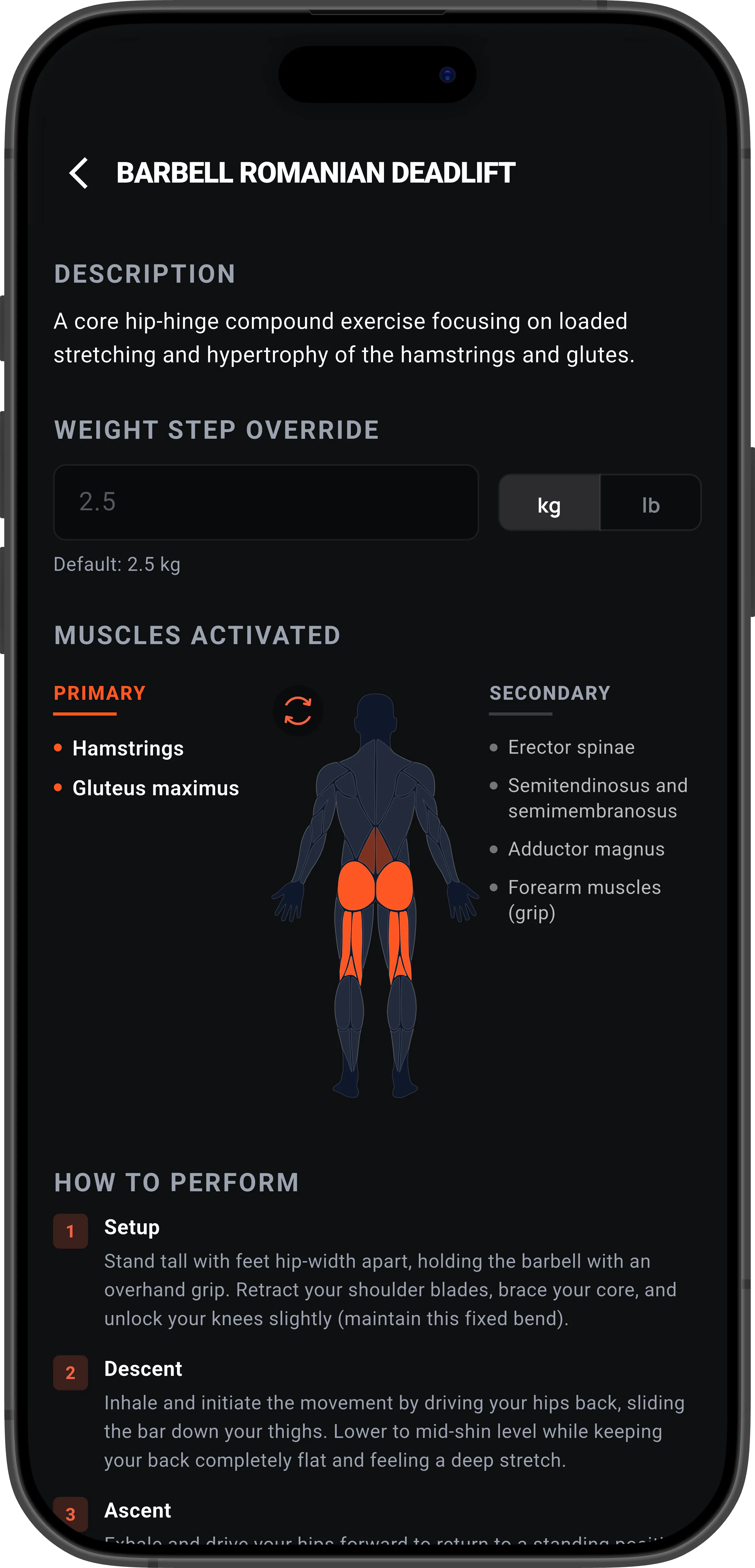
Interactive Technique Reference
Access biomechanical execution steps, critical mistake risks, and anatomical muscle maps directly during rest intervals. Train safely without clicking away to search engines.
Frequently asked questions
Everything you need to know about the methodology, data sync, and subscriptions.
It is your calculated single-repetition maximum, from which all program percentages are derived. Me.thod calculates this dynamically based on submaximal sets, avoiding the joint and CNS stress of testing real 1RM. Testing actual 1RM places extreme load on ligaments and can easily derail your training cycle; the app keeps you progressing safely using submaximal estimates.
After finishing a working set, you tell the app how many reps you felt you had in reserve (Reps in Reserve). If a set was too easy (high RIR), Me.thod safely advances the weight for the next week. If it was too heavy (low RIR), the weight is maintained or scaled back to allow recovery. The formulas are built upon the research of Dr. Eric Helms, Mike Zourdos, and established strength periodization metrics.
Warm-ups are computed based on the target working load of the exercise today. For heavy primary compound lifts, the app guides you through CNS Potentiation (ramping reps down and weight up e.g. 8/6/4/2 sets) to recruit maximum motor units without accumulating metabolic fatigue. Isolation movements receive minimal or zero warm-ups to prevent pre-exhaustion.
Yes. Me.thod is built offline-first. Your active weekly program and full history reside in a high-performance local database on your phone. You can log sets, check safety guides, and swap exercises in a complete dead-zone. The app syncs with the secure cloud backup automatically as soon as you reconnect to the network.
We take privacy seriously. Your training logs, body measurements, and schedules are securely encrypted and synchronized to your account. We never sell or share your data with third parties. Anonymous, aggregated exercise statistics may be processed internally to improve template algorithm accuracy.
Yes. Because your profile syncs securely to our database, logging in with your account credentials on any iOS or Android device restores your entire history, active templates, and current progress metrics instantly.
You receive unlimited access to all features during the trial duration to experience the benefit of autoregulation. You can cancel at any time via App Store/Google Play settings in one click, and no charges will occur if canceled prior to the trial ending.
Promo or activation codes can be typed directly inside the "Profile" section of the app. This instantly applies subscription credits or unlocks program modules to your account.